
How to Motivate a Kid Who Doesn't Want to Homeschool
Your child resists homeschooling every day. Here's why it happens and practical strategies to rebuild motivation — without turning into a drill sergeant.
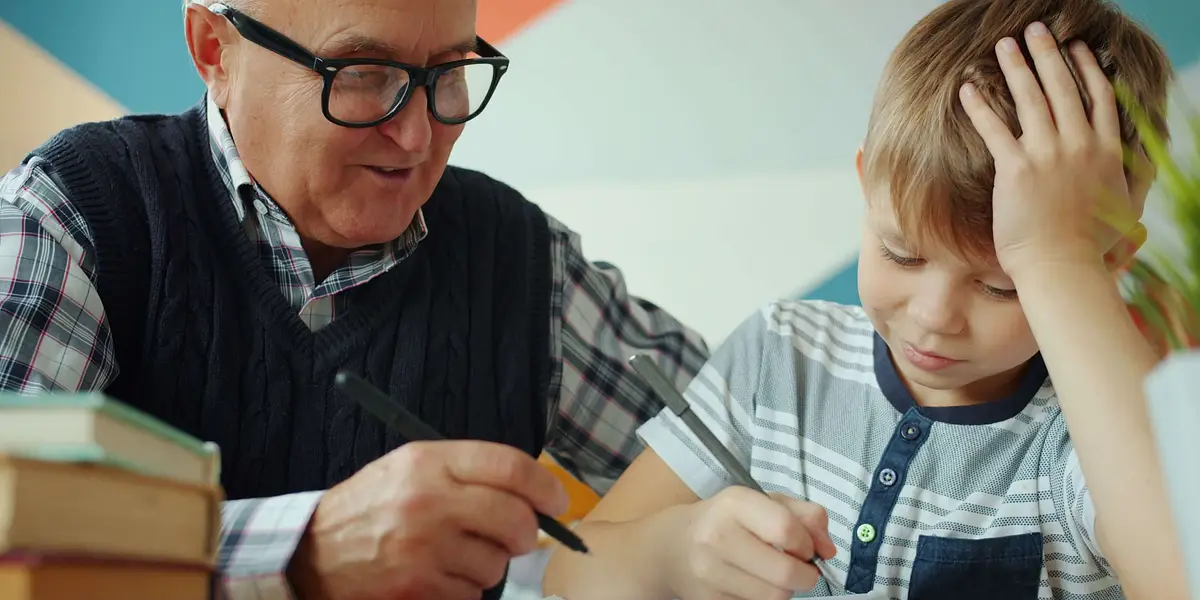
You open the math book. Your child groans. You suggest reading time. They slump in their chair. You try to start science. They argue, cry, or stare at the wall. Every. Single. Day.
You started homeschooling to give your child a better education, and now it feels like you're the one person in the world they least want to learn from. It's demoralizing, exhausting, and makes you question everything.
A reluctant homeschooler is one of the most common challenges families face — and one of the least talked about, because it feels like failure. It's not. It's a signal that something needs to change, and the fix usually isn't what you expect.
First: Figure Out WHY They're Resistant
Resistance to homeschooling isn't random. It has a cause. The strategy that works depends entirely on what's driving the resistance.
They Miss School (Social Reasons)
If your child was recently pulled from school, they may simply miss their friends. The resistance isn't about learning — it's about loss. They had a social world at school, and now it's gone.
What helps: Prioritize social connections above everything else for the first few months. Join a co-op, set up regular playdates, enroll in a class or sport where they'll see the same kids weekly. Once the social need is met, academic resistance often evaporates. Find local homeschool groups on Famlo to get connected fast.
The Curriculum Is Wrong
Sometimes the resistance isn't about homeschooling — it's about the specific materials you're using. A child who hated a textbook-heavy curriculum might love a hands-on approach. A child bored by easy worksheets might need more challenge. A child frustrated by a rigorous program might need something gentler.
What helps: Try something completely different for 2-3 weeks. If they hate a workbook-based math program, try Teaching Textbooks or Beast Academy. If they resist reading assignments, try audiobooks. Sometimes the fix is that simple. See our curriculum choosing guide.
They're Not Developmentally Ready
This is especially common with children under 7 or 8. If your child resists formal academics, they may simply not be ready for them. Developmental readiness for reading, writing, and sustained focus varies widely. Pushing a child who isn't ready creates frustration for both of you.
What helps: Step back. Do less formal work and more play-based learning. Read aloud together, explore outdoors, build things, cook together. Revisit formal academics in a few months. Children who start later consistently catch up — this is well-documented in educational research.
Power Struggles
Your child may be resisting because the dynamic has shifted: you're now the teacher AND the parent, and they're pushing back against the authority. This is especially common with strong-willed children and during the preteen/teen years.
What helps: Give them more autonomy. Let them choose which subjects to do first, where to do their work, or which project to tackle. Use a checklist they manage themselves instead of you directing every minute. The goal is to move from "I'm telling you what to learn" to "You're in charge of your learning, and I'm here to help."
They Don't See the Point
Older children (10+) may resist because they genuinely don't understand why they need to learn certain things. "When will I ever use algebra?" is a legitimate question, even if it's frustrating to hear.
What helps: Connect learning to their interests and goals. If they want to be a game developer, show them how algebra powers game physics. If they want to be a vet, show them how biology and chemistry are prerequisites. Make the "why" explicit and personal.
Underlying Issues
Sometimes resistance masks something deeper: anxiety, depression, an undiagnosed learning disability, sensory processing issues, or trauma from past school experiences. If the resistance is intense, persistent, and doesn't respond to any strategy changes, consider whether there's an underlying issue that needs professional attention.
Strategies That Actually Work
1. Start with Connection, Not Curriculum
On the worst days, close the books. Make breakfast together. Go for a walk. Play a board game. Watch a documentary. Your relationship with your child is the foundation of your homeschool. If the relationship is strained, no curriculum in the world will fix the resistance.
Some families implement a "relationship first" rule: if the morning starts with conflict, they do something fun together before attempting academics. It feels counterintuitive ("We're behind!"), but it works because a connected child is a cooperative child.
2. Give Them Choices (Real Ones)
Autonomy is one of the strongest motivators for children at any age. You're not giving up control — you're sharing it:
- "Do you want to start with math or reading?"
- "Would you rather write about this topic or that one?"
- "Do you want to work at the desk, the couch, or outside?"
- "Should we do science as an experiment or watch a documentary?"
The child who chooses their own path is far more invested than the one who's told where to walk.
3. Make It Shorter, Not Harder
If your child is resisting 45 minutes of math, try 15 minutes. Seriously. A focused, engaged 15 minutes of math is more productive than 45 minutes of tears, arguing, and staring at the wall. You can always add time later once the resistance decreases.
Use a timer. "We're going to do math for 15 minutes. When the timer goes off, we stop — even if we're not done with the page." This removes the feeling of an open-ended, endless task.
4. Follow Their Obsessions
Every child is obsessed with something: dinosaurs, Minecraft, horses, cooking, cars, anime, outer space. Whatever it is, lean into it:
- Minecraft + Math: Calculate building materials, area, volume, and ratios
- Horses + Science: Study equine anatomy, genetics, nutrition, and veterinary science
- Cooking + Everything: Fractions, measurement, chemistry, reading comprehension, cultural geography
- Anime + Language Arts: Compare manga and novel storytelling, write fan fiction, study Japanese culture
When learning connects to passion, resistance dissolves.
5. Use Natural Consequences (Not Punishment)
Punishment ("No screen time until you finish your math") creates resentment and a transactional relationship with learning. Natural consequences are different:
- "We need to finish our morning work before we go to the park with friends at noon" (natural social motivation)
- "Once your independent work is done, the rest of the day is yours" (autonomy motivation)
- "If you want to build that Minecraft mod, you'll need to understand some basic coding — want to start learning?" (interest-driven motivation)
6. Outsource the Hardest Subjects
Sometimes your child will happily do work for literally anyone who isn't you. That's not a reflection of your teaching — it's a normal parent-child dynamic. Solutions:
- Co-op classes where someone else teaches
- Online courses (Outschool, Khan Academy, Teaching Textbooks)
- A tutor for the subject that causes the most conflict
- A friend's parent who teaches in exchange for you teaching their kid something else
7. Build in Physical Activity
A child who has been sitting still and staring at a workbook is a child who will resist the next workbook. Build movement into your day: start with a bike ride, take breaks for jumping jacks, do school at the park, use a standing desk. Physical activity improves focus, mood, and cooperation.
What NOT to Do
- Don't replicate school at home. If your child hated sitting at a desk for 6 hours at school, they'll hate sitting at a desk for 6 hours at home. Change the environment, not just the location.
- Don't compare to other families. "But the Smiths' kids LOVE homeschooling!" Cool. The Smiths' kids aren't your kids. Every family's journey looks different.
- Don't take it personally. Your child's resistance to math is not a rejection of you as a parent. Try to separate your identity from your homeschool.
- Don't give up too quickly. Resistance is normal, especially in the first few months. Deschooling (the adjustment period after leaving traditional school) can take weeks or months. Give it time before concluding that homeschooling doesn't work.
- Don't ignore persistent resistance. If nothing changes after months of trying different approaches, there may be an underlying issue worth exploring with a professional.
When to Consider Going Back to School
This is worth saying: sometimes, after honest effort and multiple approach changes, homeschooling genuinely isn't the right fit for a particular child at a particular time. Signs it might be time to consider alternatives:
- Your relationship with your child is deteriorating because of homeschool conflict
- Your child has clearly and consistently expressed that they want to go to school (not just in a moment of frustration, but repeatedly over time)
- You've tried multiple approaches, curricula, and strategies without improvement
- The resistance is causing significant mental health impacts for your child or you
Sending your child to school isn't failure. It's a different choice for a different season. You can always come back to homeschooling later.
The Long View
Most homeschool families go through seasons of resistance. It's rarely permanent. The child who fights every lesson at age 8 may become the self-directed learner at age 12 who reads voraciously and pursues projects you never assigned. Kids grow. Approaches evolve. What doesn't work today might work beautifully in six months.
Your job right now is to keep the relationship strong, keep looking for what lights your child up, and trust that learning will happen — even on the days when it looks like nothing is happening at all.