

Homeschooling in Maryland
Learn how to legally homeschool in Maryland. Covers COMAR requirements, four compliance options, portfolio reviews, required subjects, and financial resources for 2025-2026.
At a Glance
Maryland homeschool law overview
- Compulsory Ages
- 5-18
- Notice Required
- Yes, to local school system
- Teacher Qualifications
- None required
- Standardized Testing
- Not required
- Compliance Options
- 4 options available
- Regulation Level
- Moderate
Important Notice
Requirements
What you need to know to start homeschooling in Maryland
Who Must Comply
Maryland law requires instruction for all children between the ages of 5 and 18. If your child turns 5 by September 1, they fall under compulsory education rules that school year. The primary legal framework is found in Maryland Code, Education Article, §7-301, with detailed regulations in COMAR 13A.10.01 (Code of Maryland Regulations, Title 13A, Subtitle 10).
Four Ways to Legally Homeschool
Maryland gives you four distinct paths to comply with homeschool law. You only need to follow one of these options:
- Direct supervision by the local school system (COMAR 13A.10.01.01) — You notify your local superintendent, teach the required subjects, maintain a portfolio, and submit to periodic portfolio reviews (up to three per school year). This is the most common route.
- Supervision by a church or religious organization — A bona fide church institution provides oversight of your homeschool program.
- Supervision by a nonpublic school or institution (COMAR 13A.10.01.05) — An approved nonpublic school (often called an "umbrella school") supervises your program and handles compliance on your behalf.
- Enrollment in a correspondence course — Your child takes an accredited correspondence program that meets Maryland standards.
Notification Requirements
Under Option 1 (direct supervision), you must notify your local school system at least 15 days before beginning instruction. The notification must include your intent to provide home instruction and basic identifying information. If you are withdrawing a child from public school, you will need to complete a formal withdrawal process with your school district. Options 2, 3, and 4 have their own reporting structures through the supervising entity.
Required Subjects
Maryland requires instruction in the following subject areas, aligned with what public schools teach:
- English (reading, writing, language arts)
- Mathematics
- Science
- Social studies
- Art
- Music
- Health
- Physical education
You have complete freedom to choose your own curriculum, textbooks, and teaching methods. The state does not prescribe specific materials — only subject coverage.
Portfolio Review Process
If you homeschool under Option 1, you must maintain a portfolio demonstrating regular, thorough instruction in each required subject. Your portfolio should include instructional materials, reading materials, samples of your child's writing, worksheets, workbooks, creative projects, and any tests or assessments you administer.
A representative from your local school system may review your portfolio up to three times per year, at mutually agreed-upon times and places. The reviewer evaluates whether instruction is "regular and thorough." If the reviewer finds deficiencies, they will provide written recommendations and allow time for improvement before any further action.
Teacher Qualifications
Maryland does not require any specific teaching credentials, college degrees, or certifications for homeschool parents. You are free to teach your child regardless of your educational background.
Record Keeping
Maintaining good records is essential, especially under Option 1. Keep your portfolio organized and up to date throughout the school year. Even if you choose Options 2–4, your supervising entity may require records for their own oversight processes. It is strongly recommended to keep attendance logs, curriculum plans, and samples of completed work for each child.
Evaluations & Assessment
Annual evaluation and assessment options
Assessment and Testing
Here is some good news for Maryland homeschoolers: standardized testing is not required. Maryland does not mandate that homeschooled students take any state assessments or nationally normed tests.
Under Option 1, your child's progress is evaluated through the portfolio review process described above. The local school system reviewer will look at work samples and instructional materials to determine whether your child is receiving "regular and thorough" instruction.
For Options 2–4, the supervising church, umbrella school, or correspondence program sets its own evaluation standards. Some may require periodic testing as part of their oversight, but this varies by organization.
What Happens If There Are Concerns
If a portfolio reviewer identifies deficiencies, you will receive written notification and specific recommendations for improvement. You are given a reasonable period to address those concerns. Only in cases of persistent non-compliance would the local system pursue further action, which could include referral to the local superintendent.
College Preparation Tip
Even though testing is not legally required, many Maryland homeschool families voluntarily administer standardized tests (such as the Iowa Assessments, Stanford Achievement Test, or CAT) to track progress, prepare for college admissions, and build a strong transcript. The SAT and ACT are also important for college-bound students.
Financial Resources
Vouchers, scholarships, and tax credits
State Financial Programs
Maryland's primary school-choice program is the BOOST Scholarship (Broadening Options and Opportunities for Students Today). However, BOOST is designed for students attending participating nonpublic schools, not homeschool families. For the 2025–2026 school year, approximately $9 million was budgeted, serving around 3,000 students. Eligibility requires qualifying for free or reduced-price meals.
Proposed ESA Legislation
Maryland does not currently have an Education Savings Account (ESA) program for homeschoolers. However, House Bill 569 (Maryland Universal School Choice Act) and HB 704 have been introduced, proposing ESAs that would provide grants to families for expenses related to nonpublic or homeschool education — including textbooks, tutoring, and curriculum. These bills have not yet passed as of early 2026, but they signal growing interest in school choice. [VERIFY current status of HB 569 and HB 704]
Federal Tax-Advantaged Accounts
While Maryland offers no state tax deductions or credits specifically for homeschoolers, you can take advantage of federal options:
- Coverdell Education Savings Account (ESA) — Save up to $2,000 per child per year in a tax-advantaged account. Funds can be used for K–12 educational expenses including curriculum, books, supplies, tutoring, and even computer equipment.
- 529 College Savings Plans — Maryland's 529 plan allows tax-free growth for future education costs. Up to $10,000 per year can be used for K–12 tuition expenses under federal law.
Extracurricular Access
Maryland does not currently have a statewide "Tim Tebow law" granting homeschooled students access to public school sports teams. However, some private schools and homeschool co-ops field their own athletic teams, and policies may vary by district. Check with your local school system for any available options.
Explore Maryland Homeschooling
More resources for your homeschool journey
Frequently Asked Questions
Common questions about homeschooling in Maryland
Written by Famlo
Famlo is where families discover local groups, classes, and events — all in one place. Get clear details, RSVP fast, and keep everything organized in one calendar you can actually trust.
- Last verified
- Last verified March 2026
- Published
- Published April 6, 2026
- Length
- 2,400 words
This guide is for informational purposes only. Laws change. Verify current requirements with your local school district or consult a qualified attorney.
Homeschooling in Maryland
Classes, groups and field trips
Coming up
See all 1272 in Maryland-

Read and Play
Eldersburg Branch
Thu, Oct 22 • 9:30 AM
Free
-

Twos and Threes Together
Finksburg Branch
Thu, Oct 22 • 9:45 AM
Free
-

Twos and Threes Together
Westminster Branch
Thu, Oct 22 • 10:00 AM
Free
-

Family Storytime
Taneytown Branch
Thu, Oct 22 • 10:00 AM
Free
-

Family Storytime
North Carroll Branch
Thu, Oct 22 • 10:00 AM
Free
-

Family Storytime
Mount Airy Branch
Thu, Oct 22 • 10:00 AM
Free
Groups and places
See all 8 in Maryland-
Library
Carroll County Public Library
MD
1 member
-
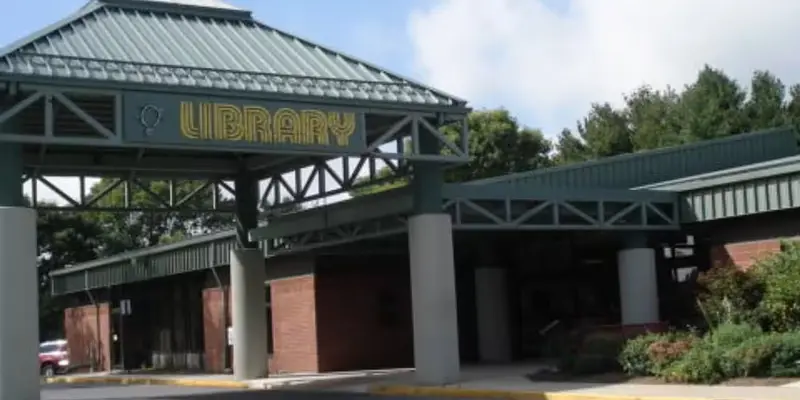 Library
Eldersburg Branch
Sykesville, MD
255 upcoming activities
-
Business
Exploration Commons
Westminster, MD
192 upcoming activities
-
Business
Finksburg Branch
Finksburg, MD
162 upcoming activities
-
Business
Mount Airy Branch
Mount Airy, MD
193 upcoming activities
-
Business
North Carroll Branch
Hampstead, MD
140 upcoming activities
Run a co-op, class or group in Maryland? Families reading this page are looking for it.
List your group — free