

Homeschooling in Texas
Texas is one of the most homeschool-friendly states in the country. Here's how to get started, what the law requires, and where to find local groups and co-ops.
At a Glance
Texas homeschool law overview
- Notification
- None required
- Evaluation
- None required
- Compulsory Age
- 6-19
- Testing
- None required
- Legal Basis
- Leeper v. Arlington ISD (1994)
Important Notice
Requirements
What you need to know to start homeschooling in Texas
Legal Foundation: The Leeper Decision
Every homeschool parent in Texas should know the name Leeper v. Arlington ISD. This 1994 Texas Supreme Court case is the bedrock of homeschool freedom in the state. The court ruled that homeschools operating in a bona fide manner are private schools under Texas law.
"Bona fide" means three things in practice:
- The instruction must be pursued in good faith. You're genuinely educating your children.
- The curriculum must be visual. You should have books, workbooks, online resources, or other materials that someone could see.
- The curriculum must cover five subjects: reading, spelling, grammar, mathematics, and good citizenship.
In 2025, the Texas Legislature passed the Homeschool Freedom Act (HB 2674), which explicitly prohibits state agencies from regulating homeschools — codifying into statute what Leeper established through case law.
How to Start
If your child is currently enrolled in school: Send a withdrawal letter. That's it. Write a simple letter stating your child's name, your intent to begin homeschooling, and the date you'll start. Send it by certified mail with return receipt requested.
If your child has never been enrolled: Just start. There is no form to file, no office to notify, no approval to wait for. You don't need to register with the Texas Education Agency or notify your local school district.
Curriculum Requirements
Texas requires five subjects: reading, spelling, grammar, mathematics, and good citizenship. Beyond that, you have total freedom in how you teach, what materials you use, and how you structure your days.
Reading: Phonics programs, chapter books, audiobooks — any approach that develops reading skills.
Spelling and Grammar: Formal curriculum, writing practice, copywork, or any method that develops written communication.
Mathematics: Saxon, Singapore, Math-U-See, Khan Academy, Teaching Textbooks, or any combination.
Good Citizenship: Character education, community service, studying the Constitution, or discussing current events.
Most families teach far more than these five subjects — science, history, foreign languages, art, music — but only those five are legally mandated.
Record-Keeping
Texas law does not require attendance records, grades, transcripts, or portfolios. But keeping records is smart. Here's what to maintain:
- Attendance log — a simple calendar marking school days
- Course descriptions — a paragraph for each subject
- Grades or evaluations
- Work samples — a few representative pieces per semester
- A running transcript — especially starting in 9th grade
If you ever need to prove your homeschool is bona fide, having organized records makes that conversation very short.
Need a letter of intent?
Generate a free, customized letter that meets Texas’s requirements.
Evaluations & Assessment
Annual evaluation and assessment options
Texas does not require standardized testing for homeschool students. No annual assessments. No portfolio reviews. No progress reports submitted to any government agency.
This means you don't have to teach to a test, interrupt your school year for state assessments, or pay for mandatory testing fees. Your educational decisions are between you and your family.
Voluntary Testing
Many homeschool families in Texas choose to test voluntarily. Common tests include the Iowa Test of Basic Skills (ITBS), the Stanford Achievement Test, or the CAT. These typically cost $30 to $75 per student and give you valuable benchmark data without any reporting obligation.
If your child plans to participate in UIL (University Interscholastic League) activities at a local public school, they will need to demonstrate grade-level academic proficiency on a nationally standardized test. So voluntary testing can serve double duty.
Financial Resources
Vouchers, scholarships, and tax credits
Texas Education Freedom Account (ESA)
Starting in the 2026-27 school year, the Texas Education Freedom Account (ESA) program created by Senate Bill 2 provides eligible homeschool families up to $2,000 per student per year for approved educational expenses like curriculum, tutoring, and educational materials. Students with disabilities may qualify for up to $30,000.
The program is funded with $1 billion from the state legislature. Participation is optional, and accepting ESA funds does not change your homeschool status or create additional regulatory requirements.
UIL Extracurricular Access
The UIL Equal Access law (SB 401, passed in 2025) allows homeschooled students to participate in UIL activities at their local public school, including sports, band, and other extracurriculars. School districts are automatically opted in unless they specifically choose to opt out. Students must demonstrate grade-level academic proficiency on a nationally standardized test to participate.
Explore Texas Homeschooling
More resources for your homeschool journey
Frequently Asked Questions
Common questions about homeschooling in Texas
Written by Famlo
Famlo is where families discover local groups, classes, and events — all in one place. Get clear details, RSVP fast, and keep everything organized in one calendar you can actually trust.
- Last verified
- Last verified March 2026
- Published
- Published February 22, 2026
This guide is for informational purposes only. Laws change. Verify current requirements with your local school district or consult a qualified attorney.
Homeschooling in Texas
Classes, groups and field trips
Coming up
See all 1422 in Texas-
Toddler Storytime
Park Forest Branch
Thu, Oct 22 • 9:30 AM CDT
Free
-
Toddler Storytime
Park Forest Branch
Thu, Oct 22 • 9:30 AM CDT
Free
-
Bilingual Storytime (Hora de Cuentos bilingüe)
Pleasant Grove Branch
Thu, Oct 22 • 10:30 AM CDT
Free
-
Toddler Storytime
Park Forest Branch
Thu, Oct 22 • 10:30 AM CDT
Free
-

Yoga for Kids
Lochwood Branch
Thu, Oct 22 • 10:30 AM CDT
Free
-
Baby and Me: Music with Ms. Paige
Bookmarks in NorthPark Center
Thu, Oct 22 • 10:30 AM CDT
Free
Groups and places
See all 32 in Texas-
Library
Dallas Public Library
TX
1 member
-
Library
Grauwyler Park Branch
Dallas, TX
10 upcoming activities
-
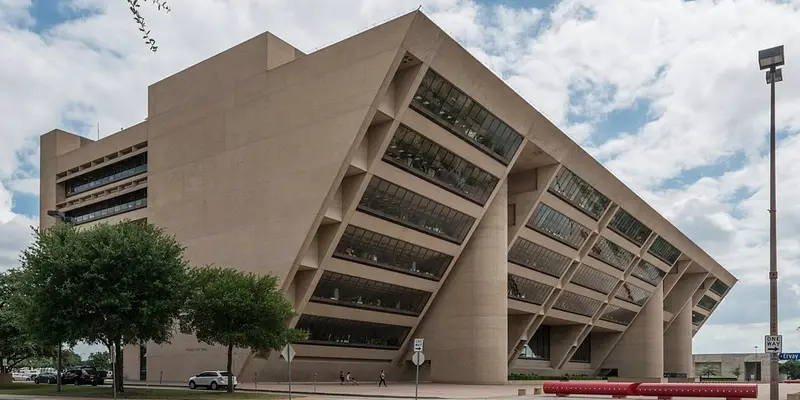 Library
J. Erik Jonsson Central Library
Dallas, TX
28 upcoming activities
-
Business
Arcadia Park Branch
Dallas, TX
12 upcoming activities
-
Business
Audelia Road Branch
Dallas, TX
23 upcoming activities
-
Business
Bachman Lake Branch
Dallas, TX
72 upcoming activities
Run a co-op, class or group in Texas? Families reading this page are looking for it.
List your group — free